Skirt Season

Midis, maxis and everything in between

The Slip Skirt: Styling Fashion's Most Versatile Bias Cut

2026-07-15

Quick Answer: The slip skirt works because its fluid bias cut contrasts with structured, matte pieces — a chunky knit, a plain tee, a blazer, a leather jacket. Pair silk with silk and it reads like sleepwear; pair it with something solid on top and it reads deliberate. Check the lining and the daylight opacity before you buy.

There’s a reason the slip skirt never actually left. It’s the one skirt that goes to four different places without changing, and the only thing that changes is what you put above it.

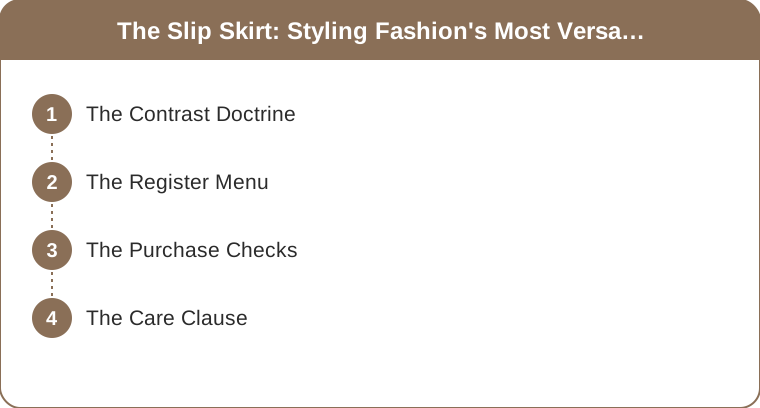
The trick isn’t the skirt. It’s the contrast.

The Slip Skirt: Styling Fashion's Most Versatile Bias Cut

At a glance

Why Does the Slip Skirt Go With Everything?

Because texture opposition does the styling for you.

A bias-cut satin skirt is fluid, shiny, and soft. Put anything matte and structured against it — ribbed wool, cotton jersey, a stiff blazer, leather — and the contrast reads as a deliberate choice rather than an accident. The skirt brings the polish; the top brings the ballast.

The failure mode is the mirror image: silk camisole with silk skirt is all fluid, all shine, and it reads nightwear no matter how expensive it was. Same skirt, chunky sweater, and it’s a Saturday outfit people compliment.

Bias cut is also doing quiet structural work. Cutting fabric on the diagonal makes it fall and cling in a way straight-grain fabric can’t, which is why the drape looks liquid and why a bias skirt skims rather than hangs.

What Do You Wear With a Slip Skirt?

Four registers, four pairings — one skirt covering casual through evening on top half alone:

  • Weekend. Chunky knit sweater, white sneakers. The heaviest possible top against the lightest possible skirt. Add a denim jacket if it’s cold.
  • Summer default. Plain white tee, tucked or half-tucked, flat sandal. The most-worn version of this outfit in existence, and still the best one.
  • Office. Structured blazer, fine-gauge knit or shell underneath, block heel or loafer. The blazer’s shoulder line is what makes the satin read professional instead of soft.
  • Evening. Strappy heel, delicate top, done. This was the skirt’s original register and it still owns it.

A fifth that’s worth knowing: leather or moto jacket with a pale slip skirt. Hardest possible contrast, and it’s the outfit that makes the skirt look expensive.

The Slip Skirt: Styling Fashion's Most Versatile Bias Cut

What Nobody Tells You About Buying a Slip Skirt

  • Unlined satin narrates everything underneath. Every seam, every waistband, every line. A lining is the single biggest quality difference between a $40 slip skirt and a $200 one, and it’s the first thing to check.
  • Do the opacity test in daylight, not fitting-room light. Pale slips — ivory, blush, champagne, pale grey — are the risky ones. Stand near a window and bend forward. Store lighting is flattering and lies about this specifically.
  • Midi length is the hardest length to get right. Aim for the hem to hit at the narrowest part of your calf, not the widest. An inch either direction genuinely changes whether the skirt lengthens or shortens your leg.
  • Waistband style decides the register. Flat elastic is more comfortable and disappears under an untucked top. A side zip gives a cleaner line and is what you want if you’ll ever tuck a shirt into it.
  • Bias cut can grow. The diagonal grain has natural give, so a bias skirt often relaxes a half size after a few wears. Don’t size up hoping it’ll shrink back.

How Do You Care for a Satin Slip Skirt?

Satin is less fragile than it looks and less forgiving than you’d hope.

  1. Wash cold and gentle, or by hand. Check the care label first — “satin” describes a weave, not a fiber, so a polyester satin and a silk satin want different things.
  2. Hang dry, away from direct sun. Sunlight fades dyes fast on shiny fabrics, and heat from a dryer flattens the drape permanently.
  3. Steam rather than iron. If you must iron, use the coolest setting and work on the reverse side. A hot iron on the right side of satin leaves a shine mark you can’t undo.
  4. Mind the snags. Bias satin catches on velcro, rough tote linings, and jewelry clasps. Store it away from anything with a hook.

Looked after properly, a slip skirt outlasts several trend cycles — which is roughly the point of buying one.

How it works

FAQ

Are slip skirts still in style?

Yes, and they’ve reached the point where the question stops mattering. The bias-cut slip has been in continuous rotation since the mid-90s and has outlived several trends that were supposed to replace it. It’s closer to a wardrobe staple than a trend piece now.

How do you stop a slip skirt from clinging?

Three fixes: a lining or a separate slip underneath, an anti-static spray, or seamless underwear in a smooth fabric. Static cling is worst in dry winter air and on synthetic satins — a quick pass with a dryer sheet on the inside of the skirt handles it in a pinch.

What shoes go with a slip skirt?

All of them, which is the point. Sneakers for weekend, flat sandals for summer, loafers or block heels for work, strappy heels for evening. The shoe is what sets the formality, so pick the shoe for the occasion and the skirt follows.

TL;DR

  • Contrast is the whole formula — fluid satin against matte, structured tops.
  • Silk on silk reads sleepwear. Break the texture match.
  • Four registers from one skirt: knit + sneaker, tee + sandal, blazer + heel, camisole + strappy heel.
  • Check the lining and do the daylight opacity test before buying.
  • Midi hem hits the narrow part of the calf, not the widest.
  • Cold wash, hang dry, steam not iron, and keep it away from velcro.

Keep Reading

This article is for general styling and informational purposes only. Trends, sizing, availability and pricing may vary by brand and season.

slip skirtbias cut skirtskirt styling

← All articles